
When H&M dropped its first AI-generated fashion campaign in July 2025, it was not a test balloon. It was the first public output of a project running since March: 30 real models, AI-cloned, ready to deploy across global campaigns without a flight, a location, or a shoot. Zara followed in December. Mango had led the field with a fully AI-generated campaign in July 2024. And Zalando had already moved roughly 70% of its editorial imagery to AI by the end of Q4 2024, cutting production time by 90%. This is the documented account of what each brand is doing, how it works, what it costs them, and what it means for every brand in fashion, including the ones that have not made the move yet.
TL;DR
- Four of Europe's largest fashion retailers, H&M, Zara, Mango, and Zalando, now use AI photography in production, not just experiments.
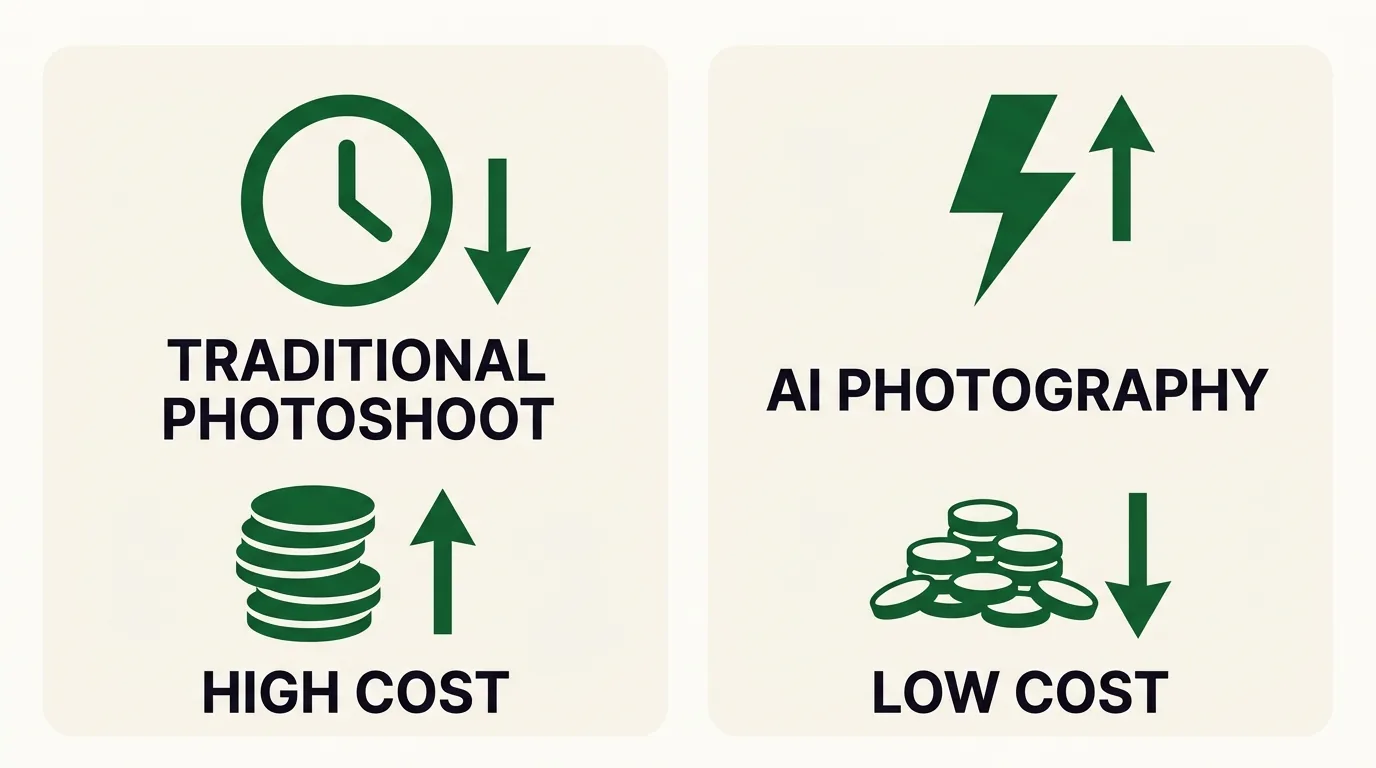
- Zalando reports up to a 90% cost reduction and 24-hour trend response versus a traditional 6 to 8 week shoot cycle, per its VP speaking to Reuters.
- The approaches differ: H&M and Zalando build consented digital twins of real models, Zara AI re-dresses existing model shots, and Mango uses fully synthetic avatars.
- A 2025 shopper survey found 71% could not tell AI images from real ones, and 60% reacted positively or neutrally when told images were AI-generated.
- The quality bar has moved globally, which matters even for brands that have not adopted AI yet.
Key definition: AI fashion photography is the use of generative AI to create or enhance on-model and product imagery, either by generating fully synthetic model shots, cloning real models into reusable digital twins, or digitally re-dressing existing photographs with new garments.
Why 2024 to 2025 Was the Tipping Point for AI Fashion Photography
These four brands did not adopt AI photography at the same time by coincidence. Three structural shifts made 2024 to 2025 the operational tipping point.
Output quality crossed the commercial threshold. Before 2024, AI-generated fashion imagery was distinguishable from real photography to any trained eye. By 2024 to 2025, that was no longer reliably true. A 2025 Stylitics/Aha Studio survey of 411 shoppers found 71% could not tell a real product photo from an AI-generated one shown side by side.
Social media content velocity made traditional shoot cycles operationally unviable. Zalando's VP of Content Solutions, Matthias Haase, told Reuters in May 2025: "We are using AI to be able to be reactive." The old six-to-eight-week production cycle was incompatible with trend windows measured in days. When "brat summer" dominated feeds in summer 2024, Zalando could respond with relevant imagery within 24 hours; a traditional workflow would have launched after the trend had passed.
The economics became impossible to ignore. Zalando's documented 90% cost reduction, from its VP speaking directly to Reuters, provided a commercial case no CFO could defer. When a peer produces equivalent-quality imagery at 10% of your cost, the question is no longer whether to adopt AI photography but how to do it responsibly.
H&M: Consented Digital Twins of Real Models
What H&M is doing
In March 2025, H&M announced a partnership with AI company Uncut to create digital twins of 30 of its real models. The project involves photographing each model extensively, in motion, in different locations, under different lighting conditions, from multiple angles, to produce high-fidelity AI replicas that can be deployed in campaign imagery without a new physical shoot.
On July 2, 2025, H&M dropped its first images using the technology, a denim campaign set against backgrounds of global fashion capitals, co-created by Uncut and a team of photographers, creative directors, AI specialists, and the models themselves.
How the model and AI relationship works
H&M's approach is deliberately differentiated from fully synthetic AI models. The digital twins are created from real people: models who are paid, own their digital doubles, and have full control over how the replicas are used. This is the ethical distinction H&M draws from approaches like Mango's, where the AI avatars are not based on real people.
The practical benefit: a model's digital twin can appear in Paris, Tokyo, and New York campaigns simultaneously, without the model travelling. No flights, no scheduling conflicts, no location costs. The model is compensated for creating the twin and earns from its use. H&M frames this as expanding model earning potential, not replacing it.
The reception
The response was bifurcated. Industry observers noted the quality was high and the consent-based approach was more defensible than competitors'. Fashion photography professionals expressed concern: 1 Granary reached out to 19 photographers and one agent, and its April 2025 coverage described the responses as "thoughtful, honest, and in many cases deeply personal," with themes of craft erosion, employment risk, and authenticity. The Modems noted H&M was "treading carefully" to avoid a Levi's-style backlash over AI model diversity claims.
Zara: AI Re-Dressing and a 43-Market Fitting Room
What Zara is doing
Zara's approach differs operationally from H&M's, but the outcome is similar: model imagery without a full photoshoot for every garment. Where H&M creates digital twins, Zara digitally re-dresses existing models. It uses existing photoshoot assets of real models, then uses AI to generate new images of those same models wearing different garments from new collections. The model's body, face, and pose stay from the original shoot; the clothing changes.
This was first reported by London business newspaper CityAM, which quoted an unnamed model: Zara asked for approval to edit AI images showing them in different garments, and paid them the equivalent of an additional photoshoot fee. Business of Fashion and FashionNetwork confirmed the story on December 18, 2025.
The virtual fitting room, 43 markets
Alongside the re-dressing initiative, Zara rolled out a virtual fitting room through its app in mid-December 2025, reaching 43 markets. Customers submit a selfie and a full-body photograph, and AI generates a personalised avatar in about two minutes showing how selected garments would look on their body. The intent is to reduce returns by improving fit confidence pre-purchase.
The Inditex infrastructure advantage
Zara operates within Inditex, one of the most AI-integrated fashion conglomerates in the world, where AI is treated as operational infrastructure rather than isolated experimentation, deployed across supply chain, demand forecasting, and now visual content. Inditex published no specific cost or time-saving figures for the AI photography initiative, consistent with how it treats standard infrastructure: not as a press story, but as how the business runs.
Mango: The First Fully AI-Generated Campaign
The July 2024 Teen campaign, the first
Mango was the first major global fashion brand to launch a campaign generated entirely by AI. In July 2024, it released a fully AI-generated campaign for its Mango Teen "Sunset Dream" limited-edition collection, a youth line available in 95 markets. The imagery appeared to be shot in the Medina of Marrakech but was entirely synthetic, described by multiple observers as nearly indistinguishable from real location photography.
The creation process, per Mango's official press release: real garments were photographed first, then a generative AI model was trained on those photos to generate images of the garments on a model in varied settings. The core challenge Mango named was editorial quality parity with real campaign photography while keeping garment representation accurate. After generation, Mango's studio art team selected, retouched, and mastered the final images before publication.
June 2025, AI extended to core product detail pages
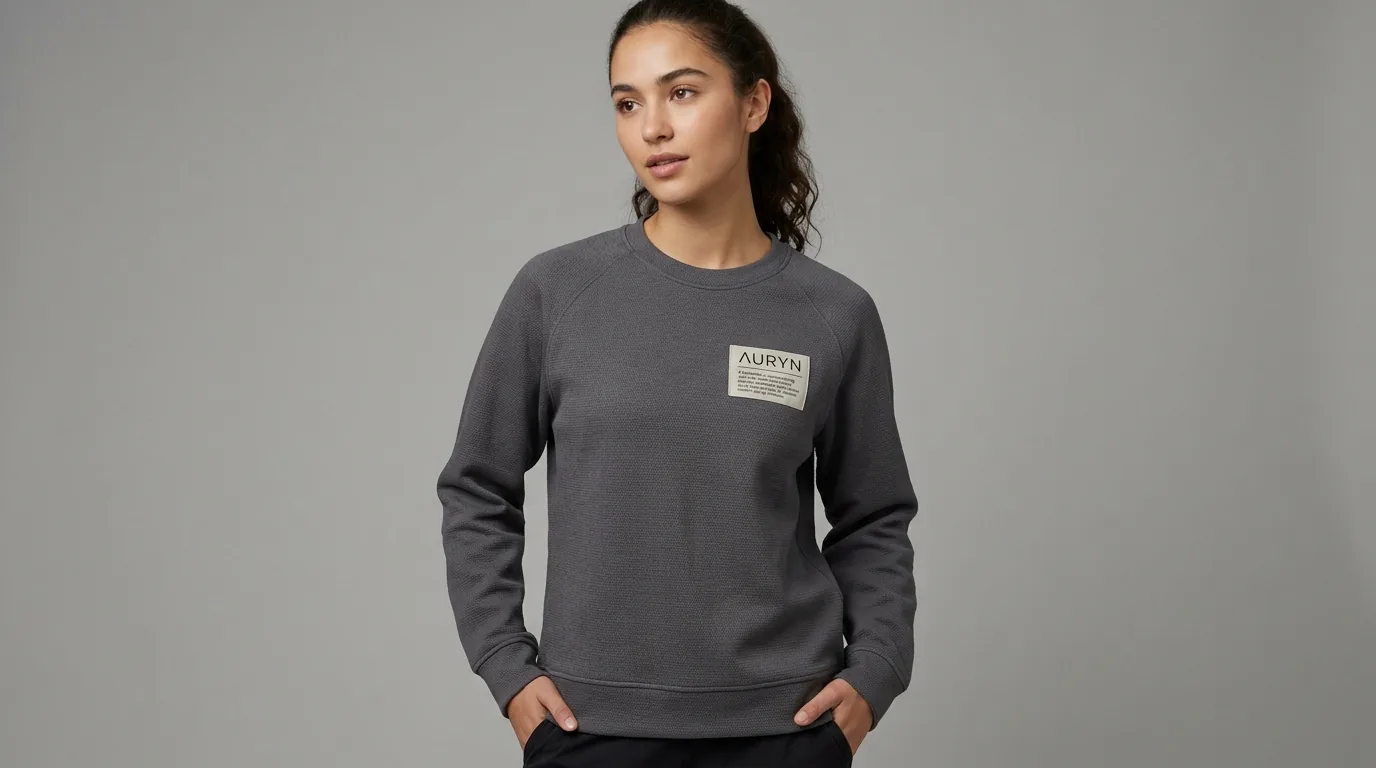
By June 2025, Mango extended AI photography from experimental campaigns to the core product detail pages (PDPs) of its ecommerce site, the primary images shoppers rely on to decide whether to buy. This was the significant operational step: no longer AI for stylised campaign content alongside real photography, but replacing the main product imagery itself with AI-generated on-model shots.
Mango includes a note on each affected PDP that virtual models are used. The placement of this note has been described by industry observers as present but subtle. A Stylitics/Aha Studio 2025 shopper survey found that 59% of shoppers want disclosure when AI imagery is used, and, critically, that 60% reacted positively or neutrally when told images were AI-generated, interpreting disclosure as a signal of honesty.
Why Mango was first
Mango's position as the first major brand to cross into fully synthetic imagery was not accidental. It reflects a strategic commitment to AI across its 2024 to 2026 business plan, which explicitly names "technological development" as a core value lever, backed by more than 15 machine learning platforms built across its operations since 2018. Mango closed 2025 with turnover close to €3.8 billion, a third of it online, making PDP imagery quality a direct commercial variable. For a fast fashion brand at this scale, AI that produces campaign imagery faster and cheaper is not a creative experiment. It is a margin decision.
Zalando: The Most Documented AI Photography Adoption in Fashion
The numbers, on the record
Zalando is the most quantified AI photography case study in the industry because its VP of Content Solutions, Matthias Haase, spoke directly to Reuters in May 2025 with specific operational figures, a business executive's account of outcomes rather than marketing claims.
By Q4 2024, approximately 70% of Zalando's editorial campaign images were AI-enhanced, confirmed on its own corporate website. When short-lived aesthetics such as "brat summer" or "mob wife" peak on social media, Zalando can produce campaign-quality imagery styled within that aesthetic in 24 hours, rather than the 6 to 8 weeks a traditional workflow requires.
Digital twins with ORENDT STUDIOS
Like H&M, Zalando is investing in AI digital twins of real models, in partnership with Hamburg-based ORENDT STUDIOS. The 3D replicas reproduce model movement and appearance, letting the same model appear in product images across multiple channels at once. CEO Torsten Orendt described the value: "The power of the digital twin lies in delivering the same high-quality content, but at scale, seamlessly and across multiple channels."
If you want the deeper mechanics of how these reusable model assets are built and reused, how AI fashion models are changing ecommerce photography walks through the workflow end to end.
How H&M, Zara, Mango, and Zalando Compare
| Brand | Approach | First AI launch | Model relationship | Cost/scale claim |
|---|---|---|---|---|
| H&M | Digital twins of real models (with Uncut) | July 2025 (denim campaign) | Real models, consented, paid, own their twin, retain control | No public figures; positioned as expanding model earnings |
| Zara | AI re-dressing of existing model shots | December 2025 | Real models, approve edits, paid an extra photoshoot fee | No public figures; treated as internal Inditex infrastructure |
| Mango | Fully synthetic AI avatars | July 2024 (Mango Teen "Sunset Dream") | Synthetic avatars not based on real people | Extended to core PDPs by June 2025; €3.8bn turnover, a third online |
| Zalando | AI-enhanced editorial plus digital twins (with ORENDT STUDIOS) | ~70% editorial AI-enhanced by Q4 2024 | Real models, consented digital twins | Up to 90% cost reduction, 24-hour trend response vs 6 to 8 weeks |
The Other Side of the Story: Photographers, Models, and the Industry
It would be incomplete to cover these initiatives without the documented impact on the professionals whose work AI photography is replacing. This is not an editorial on whether AI photography is right or wrong; it is a factual account of what the data shows.
The photographer impact: AOP January 2026 Survey
The Association of Photographers (AOP), a UK trade body with approximately 3,000 professional members including David Bailey, Rankin, and Tim Flach, published its January 2026 Copyright and AI Member Survey. The findings:
- 58% of members reported losing commissioned work to generative AI, the same proportion as the prior year survey, but with dramatically increased financial losses.
- Average annual income loss per photographer: £34,900 (about $48,000), a 142% increase from £14,400 in the prior year survey.
- The number of commissioned images licensed by AOP members fell 65%, from an average of 10,500 per person in 2025 to 4,800 in 2026.
The AOP, together with the Society of Musicians, the Society of Authors, Equity, and the Association of Illustrators, published a joint report and lobbied the British parliament. Their framing: generative AI represents "the greatest act of theft in modern history" for creative industries. Their primary demand: an opt-in system for AI training on photographers' work, and compensation for past use.
The consumer and brand perspective
The consumer data tells a different story from the photographer data. The Stylitics/Aha Studio 2025 survey of 411 shoppers found:
- 71% could not tell the difference between a real product photo and an AI-generated one.
- 60% reacted positively or neutrally ("Cool, that's smart" or "Interesting but not a big deal") when told images were AI-generated.
- 59% want disclosure when AI imagery is used, and interpret disclosure as a signal of honesty, not as a red flag.
- Acceptance depended on execution quality, transparency, and accuracy of details like fit and fabric.
The Levi's precedent is instructive. When Levi's deployed AI models in 2023, claiming they would help showcase diverse body types and ethnicities, the backlash was significant: critics argued correctly that creating AI models of different ethnicities is not the same as hiring actual people from those communities. H&M's consent-based digital twin approach was explicitly positioned to avoid a similar outcome.
The model consent question
All four brands state, publicly and on record, that their AI model imagery is either based on real models' consent (H&M, Zalando, Zara) or uses fully synthetic avatars not based on real people (Mango). This does not resolve the broader questions about photographer employment and creative displacement, but it does distinguish these approaches from using a real model's likeness without agreement. The emerging industry standard appears to be: models consent, models are compensated, models retain control. Whether it holds as adoption scales is the open question.
What This Means for Indian Fashion Brands
H&M, Zara, Mango, and Zalando are not your competitors in the Myntra and Flipkart sense. But they are setting the visual standard Indian consumers are trained on. The buyer who has seen H&M's AI editorial imagery and Mango's AI-generated PDP images is the same buyer who lands on an Indian D2C brand's product listing the next morning. The quality bar has moved, and it moved globally.
The good news: the technology is no longer locked behind a Zalando-sized budget. The reusable-model and speed advantages these giants chase, reducing time to market on new-collection imagery, are exactly what an AI fashion photography workflow puts within reach of a small brand shooting from a single product photo.
Frequently Asked Questions
Are H&M's AI model images replacing real photographers entirely?
No, at least not by H&M's stated intention. The July 2025 campaign was "co-created with a dedicated team of AI creatives, photographers, creative directors and models," per the press release, and CCO Jörgen Andersson frames the digital twin technology as a tool to "amplify creativity," not replace it. Photographer Johnny Kangasniemi, involved in the project, called it "an interesting tool to add to our creative toolbox." The documentable downstream effect: the Association of Photographers' January 2026 survey found 58% of professional photographers had lost commissioned work to generative AI, with average losses of £34,900 per person annually. Whether that is from H&M or broader industry adoption is not attributable to any single brand.
Does Zara own the models' likenesses permanently after the AI re-dressing?
The public details do not clarify permanent ownership terms. What is confirmed: Zara asks models for approval to AI-edit their existing images, and compensates them the equivalent of an additional photoshoot fee. Inditex stated publicly that all aspects are "agreed on a mutual basis" and compensation is "in line with industry best practice." The ongoing usage terms, how long Zara can use a re-dressed image, in which markets, for which products, were not disclosed. This is an area where industry contract standards are still being established.
Is Mango's approach of using fully synthetic AI models ethically different from H&M's?
In terms of model consent and compensation, yes. Mango's AI avatars are not based on real people, so there is no consent-and-compensation question for the models themselves. But this creates different concerns: the H&M approach at least maintains the diversity of real human bodies, while Mango's synthetic avatars can embed idealized proportions not grounded in any real person. The PDP note ("virtual models are used") is Mango's disclosure mechanism. Whether consumers consider that sufficient is evolving. The Stylitics survey found 59% want disclosure and 60% react positively when it is given, suggesting disclosure is the minimum viable standard.
Can Indian brands adopt the same approach as these global retailers?
Yes, and at a fraction of the setup. The global retailers built bespoke digital-twin pipelines with dedicated AI partners, but the underlying capability, generating on-model imagery from a product photo, is now an off-the-shelf tool. An Indian D2C brand or marketplace seller can produce compliant, on-model product images without a studio, a booking, or a physical model, which is exactly the gap AI product photography was built to close.
Ready to shoot like the big brands, without their budget?
The brands in this piece spent years and dedicated AI partnerships to get here. You do not have to. With Scalio, you upload a product photo and get campaign-ready, on-model fashion imagery in minutes, the same speed-and-scale advantage the giants are chasing, sized for an Indian brand's budget. Try it at web.scalio.app and see how your next listing looks when the quality bar is already met.